If you run a small business in the UK, you will already know that cash is no longer king. Customers expect to tap, swipe or insert a card without a second thought, and if you cannot take payment quickly and securely, you risk losing the sale altogether. That is why working out which is the best card payment machine for small business owners has become such a common question, and honestly, it is not always a straightforward one to answer.
There is no single device that suits every business. A busy high street shop has very different needs to a mobile hairdresser or a market trader, so the right choice really comes down to how and where you take payments. In this guide, we will walk through the main types of terminals available, share some of the best card machines on the market right now, and help you match a device to the way your business actually operates.
Why the Right Card Machine Makes a Real Difference
It is easy to think of a card machine as a small, unremarkable box that just sits by the till. In practice, it plays a much bigger role than that. The speed of your checkout, how secure your transactions are, and even how professional your business looks to customers all tie back to the terminal you choose.
Pick the wrong type and you might end up with a countertop unit that cannot move with you to a market stall, or a mobile terminal with a monthly cost you did not need for a shop that never leaves its premises. Getting this right from the start saves you money and a fair bit of hassle further down the line.
Types of Card Machines for Small Businesses
Broadly speaking, card machines fall into three categories: countertop, portable and mobile. Each one is built for a different way of working, so it is worth understanding what sets them apart before you commit to a provider or a contract.
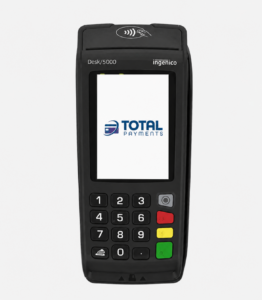
If your business operates from a single, fixed location, such as a shop counter or a reception desk, a countertop terminal is usually the most sensible option. These devices connect via a cable, which means a rock solid connection and no battery to worry about running flat halfway through a busy afternoon.
Recommended model: Ingenico Desk 5000
- Fast transaction processing
- Supports chip & PIN and contactless
- Secure, reliable connection via cable
- Ideal for high street retailers and hospitality desks
2. Portable Card Machines
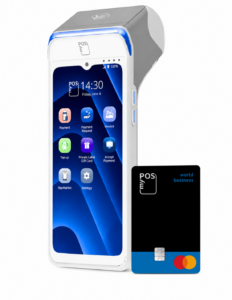
Great for cafés, restaurants, and pubs, portable card machines let staff take payments anywhere on the premises, from the counter to the customer’s table.
Recommended model: myPOS Ultra
- Built-in high-speed receipt printer
- Long-lasting battery for all-day use
- Wi-Fi and 4G connectivity
- Large 6.5-inch touchscreen
- Ideal for fast and convenient tableside payments
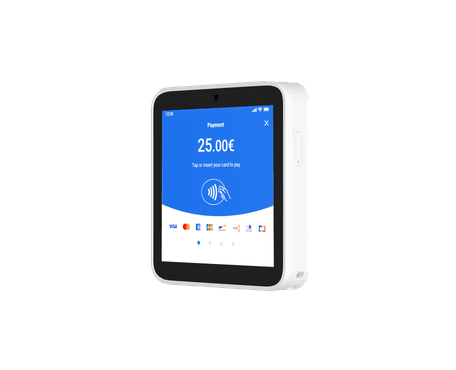
If you’re on the move, like a taxi driver, mobile therapist, or tradesperson, then a mobile terminal with built-in 4G is what you need.
Recommended model: Ingenico DX8000
- Lightweight and portable
- Includes built-in SIM for 4G payments
- Accepts all major cards and contactless
- Great for small business owners on the go
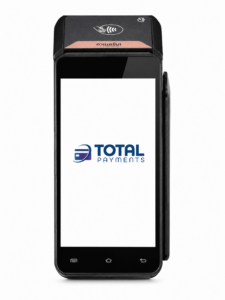
How to Choose the Best Card Payment Machines for Your Business
Once you understand the three categories, the next step is thinking about how your business actually runs day to day. A few honest questions can point you towards the right device far quicker than scrolling through spec sheets.
Start with location. Do you take payments from one fixed spot, or do you need something that travels with you? Next, think about volume. A café doing hundreds of transactions on a Saturday morning needs something quick and dependable, while a sole trader taking the odd payment each week has very different priorities.
Connectivity matters too. Wi-Fi is fine if your premises has a stable signal, but if you are outdoors, in a van, or somewhere the Wi-Fi is patchy, built-in 4G removes that worry entirely. And do not overlook the basics such as battery life, receipt printing, and how easily the machine fits into the till area or your pocket.
Comparing the best card payment machines side by side, rather than picking the first one you come across, is genuinely worth the extra ten minutes. It is the difference between a terminal that fits your business and one you end up replacing within the year.
What Do Card Machines Cost?
Pricing usually comes down to two things: the upfront cost of the hardware and the ongoing transaction fees. Some providers will supply a terminal free of charge as part of a contract, while others charge a one-off fee for the device and then keep transaction rates low.
Transaction fees typically sit somewhere between one and two percent of each sale, though the exact rate depends on your monthly turnover, the type of card being used, and whether you have negotiated a bespoke rate with your provider. On top of that, some contracts include a monthly service charge, while others are entirely pay-as-you-go with no minimum commitment.
It is worth requesting a few quotes and comparing them properly rather than assuming the cheapest headline rate is automatically the best deal. A slightly higher percentage fee can work out cheaper overall if there is no monthly charge attached, particularly for businesses with lower transaction volumes.
Contract or Pay As You Go?
This choice tends to split opinion, and there is no universally right answer. A fixed contract, usually running for one to four years, often comes with lower transaction fees and extra features such as detailed reporting or integration with your till system. If you already know your business is here to stay and your card volumes are steady, this route can save money in the long run.
Pay-as-you-go plans, on the other hand, suit newer businesses or those with seasonal or unpredictable trade. You avoid being tied into a lengthy agreement, and you only pay for what you use. The trade-off is usually a slightly higher percentage fee per transaction.
Neither option is wrong. It simply comes down to how confident you feel about your future trading patterns and how much flexibility you want to keep.
Getting Started With Total Payments
Whichever type of terminal suits your business, having the right support behind it makes the whole process much smoother. Our range of card payment machines covers countertop, portable and mobile options, so you are not stuck trying to force a one size fits all solution onto your business.
If you are still weighing up your options, our team can talk you through merchant services for small businesses and help you find a plan that actually reflects how you trade, rather than a generic package. You can also read what other business owners have said about working with us on our customer reviews page before you make a decision.
Getting set up does not need to be complicated. Our UK-based Welcome Team handles the onboarding, and ongoing support is available seven days a week if you ever run into an issue.
Frequently Asked Questions
What is the difference between a card reader and a card terminal?
A card reader usually pairs with an app on your phone or tablet to process payments, while a card terminal is a standalone device that handles everything itself, including the software and the connection to your payment provider.
How much does a card machine cost for a small business?
Hardware costs vary widely, from free with certain contracts up to a few hundred pounds for a one off purchase. Transaction fees generally range between one and two percent per sale, sometimes with an added monthly service charge depending on your plan.
What happens if my internet or Wi-Fi goes down?
Most modern terminals have a backup option. Devices with a built-in SIM will switch to 4G automatically, and some providers offer an offline mode that stores transactions and processes them once your connection returns.
Can I get a free card machine for my small business?
Some providers offer free hardware as part of a monthly contract, though this is usually balanced out with a fixed term agreement or a slightly higher transaction rate. It is worth comparing the full cost over twelve months rather than focusing on the free machine alone.
Do I need a different machine for a market stall or pop-up shop?
Yes, typically. Fixed countertop machines are not designed to travel, so a portable or mobile terminal with Wi-Fi or 4G connectivity is a better fit for markets, pop-ups, and any setting without a permanent power or internet connection.