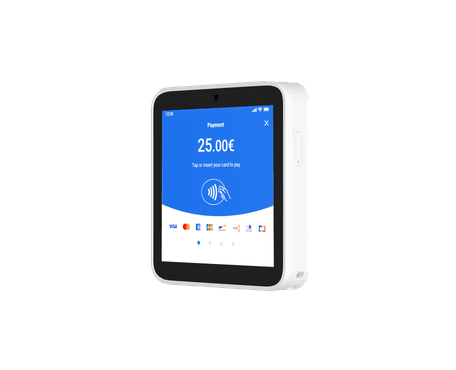
Not long ago, tapping a card on a reader felt like a small novelty. Now it is the default way many of us pay for a coffee, a train ticket or the weekly shop. UK Finance’s latest Payment Markets figures show that contactless payments made by card or mobile device reached 19.2 billion in 2025 and accounted for 39 per cent of all UK payments. A decade earlier, the figure was just 3 per cent.
That kind of growth says a lot about how well contactless fits everyday life. It is quick, familiar and, for most purchases, genuinely easy. Even so, it is not flawless, and what works well for a shopper does not always work as well for a business. This guide looks at the advantages of contactless payment from both sides of the counter, explains the limitations worth knowing about, and finishes with practical tips for getting more out of it.

How Does Contactless Payment Work?
Contactless payments use near field communication (NFC), a short-range wireless technology built into modern cards, smartphones and wearables. Hold the card or device a few centimetres from the reader and the payment details are passed across in an encrypted form. Each transaction also generates a unique code, so the information captured during one payment cannot simply be reused for another.
Many people still think of cards first, but a growing share of tap payments now come from phones and watches through services such as Apple Pay and Google Pay. The same UK Finance report found that 65 per cent of UK adults were registered for at least one mobile payment service in 2025, up from 57 per cent the year before.
The Benefits of Using Contactless Payment for Customers
Speed and convenience
For most shoppers, the biggest benefit of contactless payments is time. There is no PIN to remember, no chip to wait on and no hunting for the right change. A tap takes a second or two, and that adds up over a week of coffees, commutes and quick shops.
Less cash to carry
Because your phone or card is usually already in your hand, you do not need to plan ahead with a trip to the cash machine. That is handy for small, spontaneous purchases, and it removes the worry of losing a wad of notes.
Strong protection if something goes wrong
Contactless does not leave you exposed. The FCA has confirmed that existing consumer protections remain in place and that customers must be reimbursed in unauthorised fraud cases, such as when a card is lost or stolen. Mobile wallets add another layer, because your phone normally asks for a fingerprint, face scan or passcode before it releases a payment.
A clearer view of your spending
Many banking apps show a payment within moments of the tap. That makes it easier to keep an eye on your budget, spot something unfamiliar and report it quickly.
Contactless Payment Advantages for Businesses
Customers tend to notice the speed, but the commercial case for accepting tap payments goes further than shorter queues.
Quicker service at busy times
Every second saved per transaction frees up staff time. In a café at 8.30am or a shop at lunchtime, that can mean serving more people with the same team, and fewer customers giving up on a long queue.
Less cash handling
Cash needs counting, securing, banking and reconciling, and each step costs time and carries some risk of error or theft. Taking more payments by card will not remove cash completely, but it does reduce the daily admin around it. Settlement speed matters too. Some terminals, such as the myPOS card machines available through Total Payments, support instant settlement, so takings reach your account sooner.
Flexible ways to take payments away from the till
Some of the strongest contactless payment advantages show up away from the counter. Mobile card machines let market traders, mobile services and delivery drivers take a tap payment on the spot, while unattended card terminals make it possible to sell through vending machines, kiosks, parking meters and ticketing systems with no member of staff present. Where tapping is not possible, such as with an invoice or a remote sale, a payment link lets customers pay by card from their own device without you needing a website.
Meeting customer expectations
With contactless now making up almost two in five UK payments, many customers simply expect to tap. A business that cannot accept it risks losing impulse sales and looking out of date. For many small firms, the benefit of contactless payments is less about a dramatic sales boost and more about removing a reason for customers to walk away. Choosing from a range of card machines that accept chip, contactless and mobile payments is usually the simplest way to get started.
The Advantages and Disadvantages of Contactless Payment: A Balanced View
No payment method suits every situation, and contactless is no exception. These are the main limitations to keep in mind.
Transaction limits and PIN checks
Contactless card payments have traditionally been capped at £100 per transaction, with banks also asking for a PIN after a certain number of taps or a certain amount of cumulative spend. Since March 2026, FCA rules have allowed banks and payment providers with strong fraud controls to set their own limits. In practice, the regulator expects most of them to keep their existing limits for the foreseeable future, so £100 is still the figure most people are likely to meet. Mobile wallets are different. Because the phone verifies who you are, they are not tied to the same fixed cap.
Lost cards and fraud risk
If a card goes missing, someone could make small tap payments before you report it. The risk is limited by the per-payment and cumulative checks, and by the reimbursement protections mentioned earlier, but speed still matters. Freeze or cancel the card in your banking app as soon as you notice it is gone. Many banks also let you set a lower personal limit or switch contactless off entirely, which the FCA encourages firms to offer.
It is easy to overspend
Tapping does not feel like handing over money in the way counting out notes does. Small purchases can add up unnoticed, particularly with a mobile wallet that is always to hand. Checking your app each week, or turning on spending alerts, keeps things in view.
Not everyone is on board
Contactless is popular, but it is not universal. UK Finance data shows that 89 per cent of 25 to 34 year olds are registered for a mobile wallet, compared with 29 per cent of the over 65s. Cash still accounted for 8 per cent of UK payments in 2025, and around 3 per cent of adults mainly use it. Businesses should therefore keep other options open, including chip and PIN and, where relevant, cash.
Costs and practical limits for businesses
Accepting cards comes with fees, and rates vary by provider, card type and the way you trade, so compare quotes rather than assuming the lowest headline price suits you. You also generally cannot pass those costs on to consumers through a surcharge on card payments. Contactless depends on working equipment and a reliable connection too, so a backup, such as a terminal with mobile data connectivity, is a sensible precaution for busy venues.
Tips for Getting the Most from Contactless
To get the most from the benefits of using contactless payment, a few simple habits make a real difference.
For customers
- Turn on payment notifications in your banking app.
- Check whether your bank lets you set a lower contactless limit, and use it if that suits you.
- Use a mobile wallet where you can, for the extra identity check.
- Report a lost or stolen card straight away.
For businesses
- Choose a terminal that fits how you trade, whether that is countertop, portable, mobile or unattended.
- Look at settlement times as well as fees.
- Make sure staff are comfortable with PIN prompts. They are a normal security check, not a fault.
- Keep a backup way to take payments for days when the connection drops.
Conclusion
Contactless has earned its place because it solves a simple problem well. It makes paying quicker and easier for customers, and it helps businesses serve more people with less hassle. Weighing up the advantages and disadvantages of contactless payment shows that the drawbacks are mostly manageable, from card limits and lost cards to fees and uneven adoption, provided customers stay alert and businesses offer a sensible mix of ways to pay.
If you run a business and are not sure which setup suits you, get in touch with Total Payments and we can help you compare card machines and providers based on how you actually trade.
Frequently Asked Questions
1. Do businesses pay extra fees for accepting contactless payments?
Contactless payments generally use the same processing fee structure as standard card transactions. However, the exact costs depend on your payment provider, card type and merchant agreement. Businesses should compare transaction fees and any equipment costs before choosing a contactless payment solution.
2. Can small businesses accept contactless payments without a card machine?
Yes. Some payment providers offer Tap to Pay technology, allowing compatible smartphones to accept contactless payments without a separate card terminal. This can be particularly useful for mobile businesses, sole traders and small retailers looking to reduce equipment costs.
3. What happens if a contactless payment is declined?
A contactless payment may be declined because of insufficient funds, security checks, technical issues or a requirement for PIN verification. Customers can try inserting their card and entering their PIN, using another payment method or contacting their bank if the problem continues.
4. Can contactless payments be accepted without an internet connection?
Some card terminals support offline contactless payments, but availability depends on the terminal and payment provider. Offline transactions may be subject to restrictions and additional risks, as payments are not always authorised immediately. Businesses should confirm offline capabilities with their provider.