
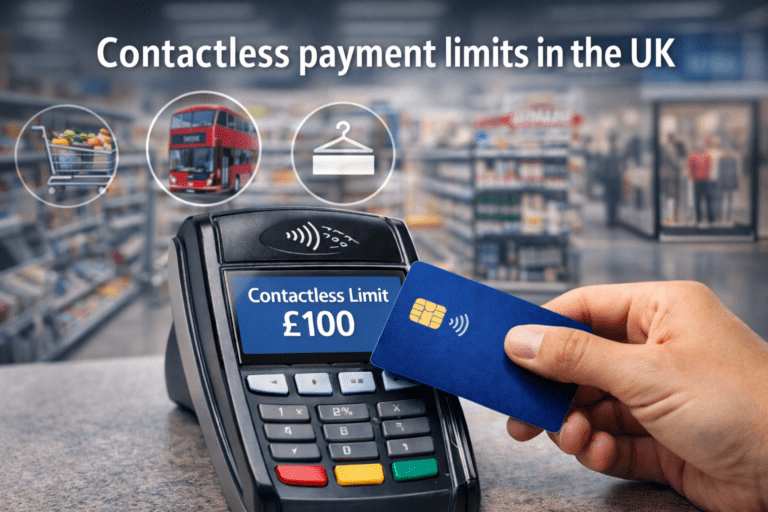
Contactless payment limits shape how everyday card transactions operate across Britain. Consumers frequently search for answers to questions such as what is contactless limit, what is the limit for contactless payment?, and what is apple pay contactless limit when deciding how much they can safely spend in a single tap. In the UK, the standard contactless card limit is £100 per transaction for most debit and credit cards, and the contactless credit card limit generally follows the same national threshold. This contactless card payment limit applies in supermarkets, hospitality venues, transport networks and retail environments nationwide.
Contactless payment limits are designed to balance speed with robust fraud prevention. They determine when a PIN must be entered, how cumulative transaction monitoring works, and how digital wallets differ from plastic cards. Understanding these rules helps customers avoid unexpected verification prompts and enables businesses to maintain efficient, secure checkout processes.
How UK tap-to-pay thresholds operate
The £100 national tap threshold allows most everyday purchases to be completed quickly without inserting a card or entering a PIN. However, behind the scenes, issuing banks apply layered risk management systems. These include cumulative transaction tracking, behavioural analytics and real-time fraud detection. If unusual spending patterns are identified, additional authentication may be required.
For example, if several transactions are made consecutively within a short period, the terminal may prompt the customer to insert their card and enter a PIN. This security reset confirms the authorised user is present and prevents repeated unauthorised spending if a card has been misplaced. The process operates automatically and is designed to be minimally disruptive while still providing strong safeguards.
Retailers benefit from predictable transaction flows. The defined ceiling enables faster queue management, particularly in high-footfall environments such as supermarkets, convenience stores and quick-service restaurants. At the same time, the invisible fraud monitoring framework protects both merchants and customers from misuse.
Understanding the contactless card limit in daily spending
Although the £100 cap is widely recognised, the contactless card limit functions within a broader cumulative control system. A customer might make several smaller purchases during the day and still be asked for verification once a rolling internal threshold is reached. This layered protection ensures that speed does not come at the expense of safety.
In practical terms, most transactions are approved instantly. Occasional PIN prompts simply act as routine security confirmations rather than indicators of technical issues. The balance between convenience and protection has contributed significantly to the widespread adoption of tap payments throughout the UK.
Physical cards compared with mobile wallet payments
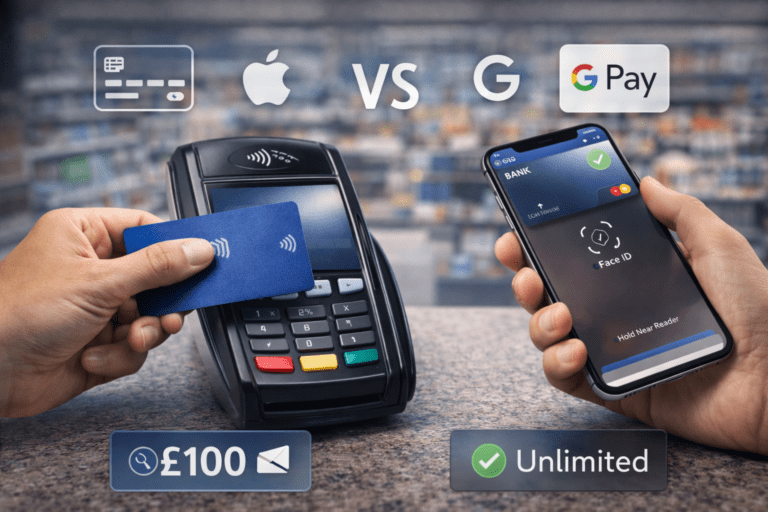
Digital wallets such as Apple Pay and Google Pay introduce biometric verification before a transaction is transmitted to the payment terminal. Fingerprint recognition or facial identification confirms identity directly on the device. Because of this additional authentication step, some merchants may allow higher-value purchases than those permitted on a standard plastic card.
Nevertheless, acceptance policies vary. Certain retailers maintain the same £100 ceiling across both physical cards and mobile devices, while others permit larger transactions when biometric confirmation is present. The final outcome depends on terminal capability, merchant risk policy and issuing bank parameters.
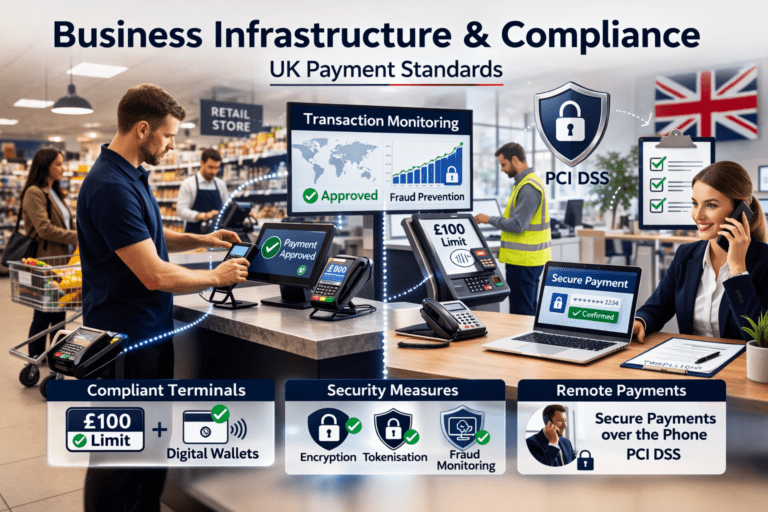
For businesses, ensuring terminals are configured correctly and updated to current standards is essential. Modern devices support encrypted communication, tokenisation and secure authorisation protocols. Customers, meanwhile, benefit from seamless checkout experiences that combine convenience with advanced security technology.
Why the national threshold has evolved
When contactless technology was first introduced in the UK, the permitted tap amount was significantly lower. Over time, as fraud detection systems improved and consumer confidence increased, the ceiling was raised incrementally to its current £100 level. Each increase followed industry reviews of fraud data, transaction behaviour and technological safeguards.
Raising the threshold enabled consumers to complete a broader range of purchases without interruption. It also reflected broader societal shifts towards digital-first payment habits. Despite the higher cap, strong cumulative monitoring ensures that risk remains controlled.
Industry bodies such as UK Finance publish guidance on card security standards, while the Financial Conduct Authority oversees regulatory compliance across the financial sector.
These organisations help maintain trust in the UK’s payment infrastructure.

Business infrastructure and compliance considerations
Merchants should periodically review their payment systems to ensure alignment with national standards and evolving consumer expectations. Implementing reliable card payment solutions supports secure processing and helps minimise declined transactions.
Retailers operating self-service kiosks or unattended environments should verify that their card machines are configured to handle updated tap ceilings and digital wallet authentication.
Businesses that accept remote orders must also maintain secure payments over the phone processes to protect cardholder data and reduce fraud exposure.
Maintaining compliant infrastructure not only ensures regulatory alignment but also enhances customer confidence and operational resilience.
Conclusion
Contactless payment limits underpin the efficiency and security of the UK’s modern payment ecosystem. The £100 tap threshold, supported by cumulative monitoring and behavioural analysis, enables quick transactions while maintaining strong protection against fraud. For consumers, understanding how these safeguards operate reduces confusion at checkout. For businesses, aligning systems with national standards ensures smoother processing and sustained compliance.
If your organisation is reviewing its payment infrastructure or planning an upgrade, Contact Us today to explore secure, future-ready solutions tailored to your operational needs.
Frequently Asked Questions
Can I make several £100 transactions in one day?
Yes. There is no fixed daily limit, although rolling verification systems may require authentication after repeated taps.
Why am I occasionally asked to enter my PIN for smaller purchases?
Cumulative monitoring mechanisms prompt verification periodically to prevent unauthorised use.
Are digital wallet transactions safer than plastic cards?
Both use encryption and tokenisation, but mobile wallets add biometric confirmation for each payment.
Do all banks apply identical rules?
While £100 is the national ceiling, individual institutions may apply additional internal risk controls.
